Vier Aquarelle – Four Watercolours

Oben: Da ich dienstlich viel im Landkreis unterwegs bin, suche ich mir bei schönem Wetter immer eine Bank für die Mittagspause. Diese hier steht nahe Wulfertshausen. Unten: mal wieder ein Gartenbild – die Ehefrau eines Klienten hatte mir ihren stolz gezeigt.

Above: since most of the clients I have to visit live in the surrounding villages, I like to choose nice places for my lunch break (as long as the weather allows it). Below: once again the garden of a client whose wife showed me around.

Außerdem habe ich auch mal wieder ein Foto meines Urlaubs im Périgord als Vorlage genommen; dieser gotische Kamin im kleinen Ort Carlux ist nicht nur hübsch, sondern auch eine Seltenheit.

Also, I once again used a photo from my trip to the Périgord region in France as reference for a small watercolour: this gothic chimney not only looks nice but also is a rare historic piece.

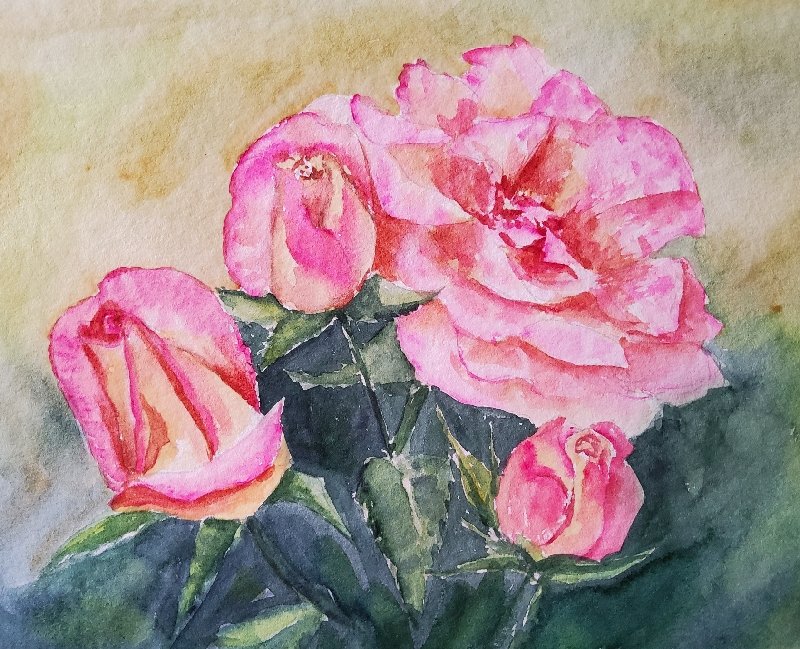
Zum Schluss habe ich mich noch an zweifarbige Rosen gewagt – so perfekt sind sie nicht geworden, vielleicht in ein paar Jahren….

Last not least I tried some two-coloured roses, which haven’t come out perfect. Guess I’ll need some more practice…
Landschaften und Erinnerungen – Landscapes and Memories

An der Rosa Granitküste, Bretagne/The Pink Granite Coast, Brittany

Fotos erhalten die Erinnerung an schöne Urlaubstage, großartige Landschaften und interessante Orte. Mehr noch, wenn diese Fotos als Vorlage für Aquarelle dienen – es ist ein Nochmal-Erleben der besonderen Art.

Photos preserve our memories of happy vacations, great landscapes and interesting places. Even more so, when they serve as reference for watercolours – painting is a special kind of reliving.

St.Jean de Côle, Périgord
Harburg bei Nördlingen/Harburg Castle near Nördlingen

Und nun habe ich noch ein Bild von meiner gestrigen Fahrradtour. Bei herrlichem Wetter konnte man von den Hügeln im Landkreis Friedberg die Alpen sehen – und bei Aufnahmen mit dem Teleobjektiv rückten diese optisch noch näher heran.

The last picture is from my bike tour yesterday: great weather offered a view of the alps from the hills around Friedberg. Taking pictures with the tele photo lens they seemed even closer.

Noch einmal Auriac – Auriac, Once Again

Dieses kleine Dorf hatte so viele hübsche Ansichten, dass ich nochmal eine malen musste. Hier das obligatorische Gefallenen-Denkmal in der Ortsmitte. Größe 23x18cm.

This small village has so many picturesque views that I just had to paint another one, showing the obligatory memorial site for fallen soldiers. Size 23x18cm(9×7inches)

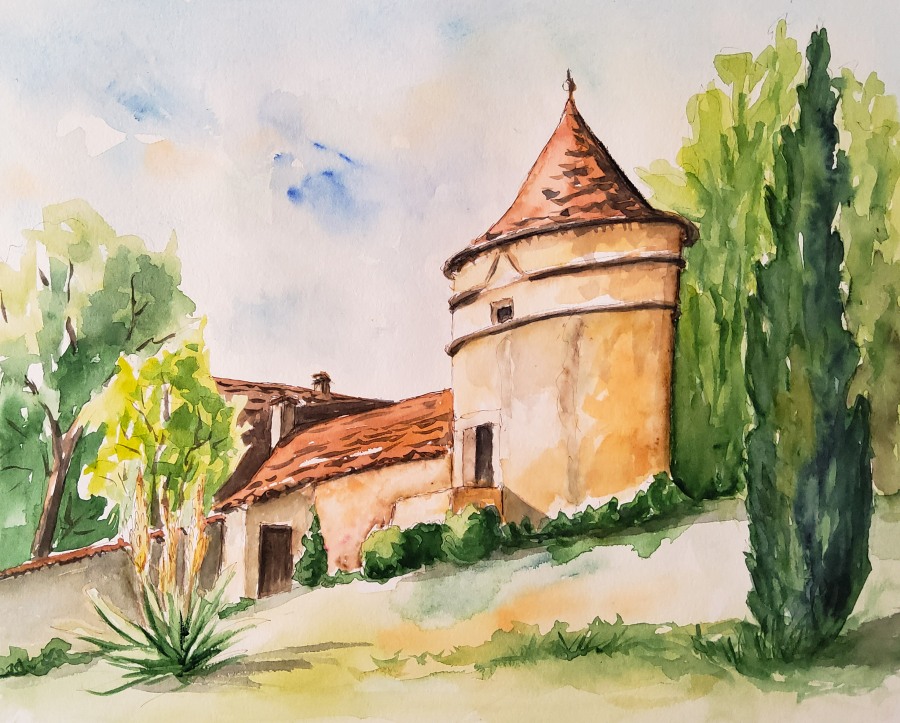
Taubenturm in Plazac – Dove Cove in Plazac

Ein weiteres Bild aus der Périgord-Serie. Ich hatte das Motiv damals für eine Postkarte gezeichnet und nun aber als etwas größeres Aquarell gemalt. Eine Freundin bat mich, stets die Größe meiner Arbeiten mit anzugeben, da man sich das am Bildschirm schlecht vorstellen kann: ich werde versuchen, daran zu denken! Dies ist nun 30×24cm, also etwas größer als DINA4.

Another picture from my Périgord series. At the time I had already used this motive for a sketched postcard, now I’ve done it as a larger watercolour. A friend just asked me to also post the sizes of my works because they’re hard to know from the screen: well, I’ll try to remember that! This one is 30x24cm (11,8×9,4inches).

Montignac

Ein hübscher Ort, mit viel Tourismus in der Hochsaison, da er nah an allen Hauptattraktionen der Gegend liegt, insbesondere an der weltberühmten Höhle von Lascaux und anderen archäologischen Stätten. Im Juni hielt sich der Trubel noch sehr in Grenzen. Das Bild zeigt den Blick vom Ufer der Vézère auf die Altstadt. Vielerorts in Frankreich zu sehen: der angesähte Blumenschmuck in den Landesfarben blau-weiß-rot. Hier fand ich es besonders interessant, da sich die Farben in den Dächern – hier rote Ziegel, da blaugrauer Schiefer – wiederholen.

A pretty small town, with a lot of tourists during high-season because it’s situated near most of the main attractions like the world-famous Lascaux Cave and other archaeological sites. In June, it still was quiet enough. The picture shows the view over the Vézère river towards the old part of the town. In France, you often see flower combinations in the national colours. Here, I found them especially intriguing because they corresponded with the colours of the roofs: red tiles and blue-gray slate.

Jardins de Cadiot

Vom Jardins de Cadiot hatte ich ja schon geschwärmt und viele Fotos gepostet. Zwei davon habe ich jetzt gemalt:

With my post about the trip to the South of France I already had shown many photos of the Jardins de Cadiot, a beautiful garden. Now I’ve used two of them as reference for watercolours:

Das Wort „Garten“ ist im Namen im Plural verwendet, da in verschiedenen Bereichen der Anlage auch unterschiedliche Gartenformen gestaltet wurden. Oben der „Toskanische“ Garten, unten der „Portugiesische“ Garten. Wie man sieht, sind liebevoll typische Merkmale der jeweiligen Landschaft integriert: der Muschelbrunnen für die Toskana, die Fliesen und Farbe Blau für Portugal.

The French word for „garden“ has been used in the plural because on the whole grounds there have been created different areas with a variety of garden types. Above you see the „Tuscany“ garden, below the „Portuguese“ garden. As you see, typical elements of the different landscapes have been integrated: the seashell basin for Tuscany, the colour blue and the tiles for Portugal.

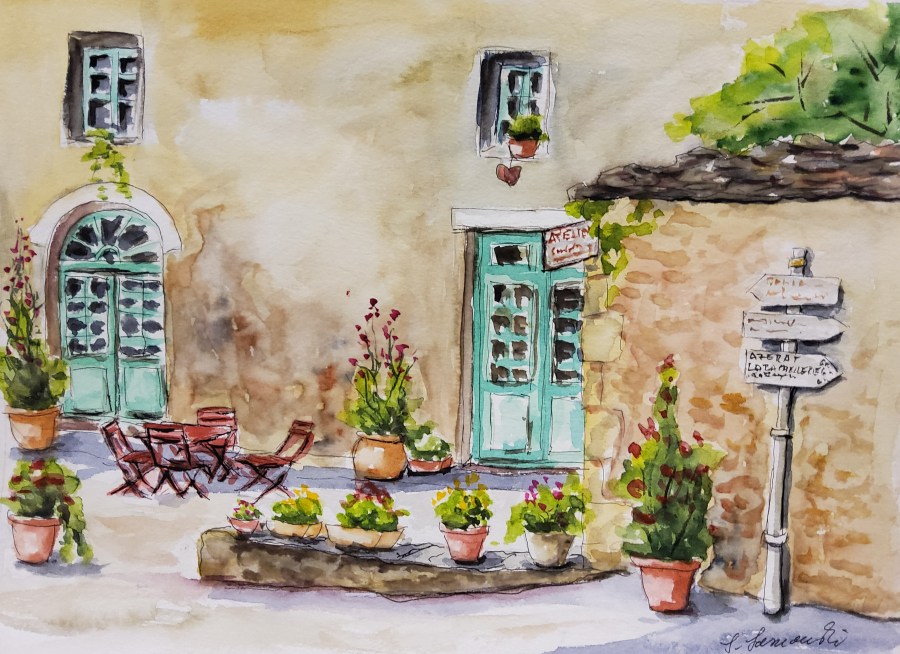
Ansichten von Auriac – Views in Auriac

Dies klitzekleine Dorf im Perigord hat so viele hübsche Ecken! Da ich gerade verschiedene Aquarellblöcke teste, habe ich gleich zwei Motive aus der Ortschaft gemalt. Ja, ich wage es inzwischen, auf guten, teuren Blöcken zu malen, nicht nur im Büchlein. Letztere hebe ich mir für unterwegs auf!

This tiny village in the Perigord region offers really nice views! Testing different watercolour pads, I’ve painted two motives from the village. And yes, by now I’m confident enough to use high quality, expensive pads instead of journal-style books – at least at home. So I save the books for outdoors and Urban Sketching!

Höfe nahe der Kirche/Farmhouses near the church
Dorfplatz/Village sqare

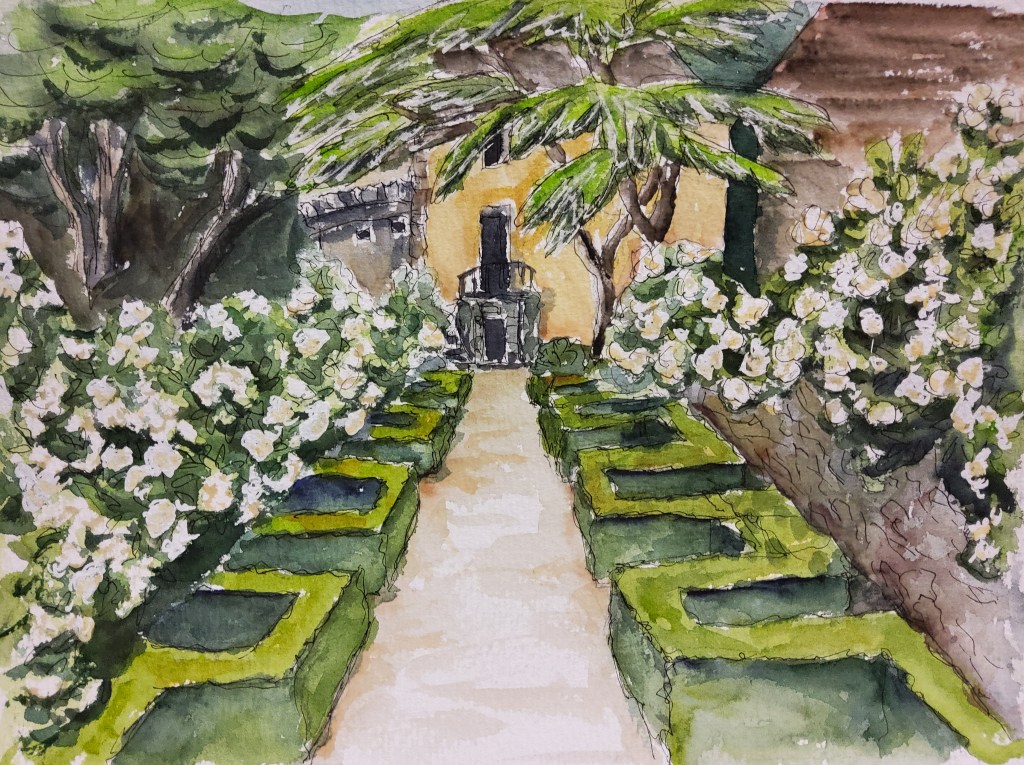
Rosengarten – Rose Garden

Im Garten von Château de Losse, Périgord, Frankreich, fand ich diese üppigen weißen Rosen. Die akkurat geometrisch geschnittenen, niedrigen Buchshecken kontrastieren mit den überbordend wuchernden Rosenbüschen.

In the gardens of Château de Losse, Périgord, France, I found these gorgeous white roses. The accurately cut, low boxwood hedges with their geometric shape create a perfect contrast to the exuberantly sprawling rose bushes.

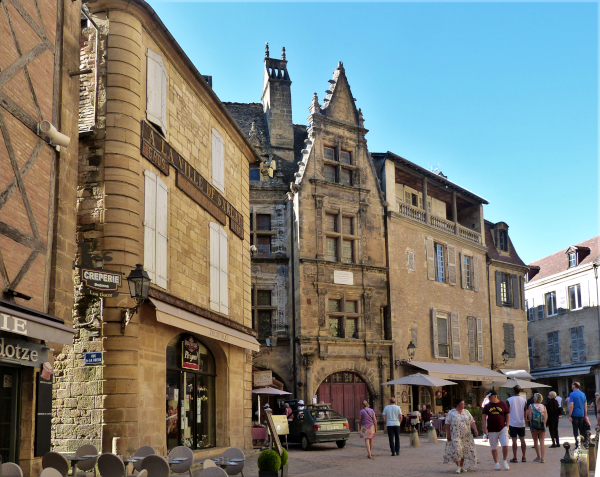
Sarlat-la-Canéda

Mit Zeichnen und dem Herstellen von Weihnachtsgeschenken habe ich ganz übersehen, dass von meiner Fotoreportage über den Urlaub im Périgord noch einige Tage/Orte fehlen… Daher geht es heute weiter, und zwar mit der wohl berühmtesten Stadt im Périgord Noir: Sarlat(la-Canéda).
Sketching and creating Christmas gifts, I failed to recognize that there are still some posts left with photos from my trip to the Périgord region, France. So today I continue with probably the most famous city in the Périgord Noir, Sarlat(la-Canéda).

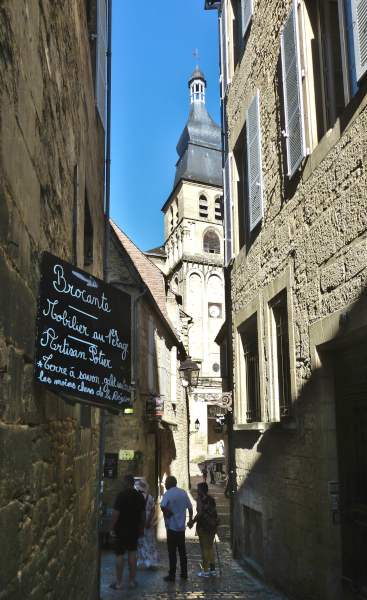
Berühmt für ihre romantische Altstadt und kleinen Gassen, ist die Stadt in der Hochsaison allerdings sehr überlaufen. Im Juni, und am frühen Abend, fand ich problemlos Platz zum Parken und Fotografieren.

Famous for its pictureque medieval centre and small alleys, the town is crowded in July and August. In June, and in the early evening hours, there was enough space for parking and taking photos.

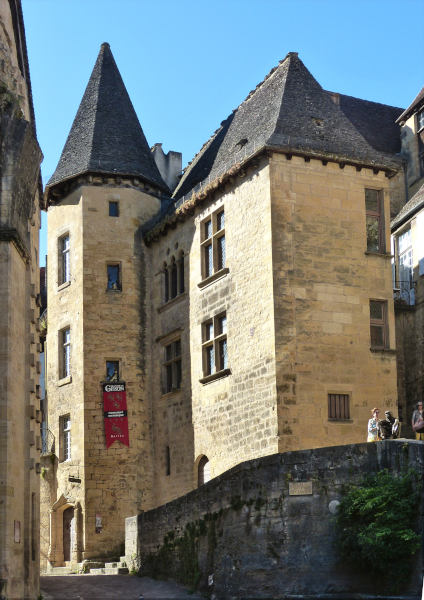
Oben/Above: Place du Peyrou, Maison de la Boétie

Unten/Below: Place du Marché aux oies (Gänsemarkt/Goose market)

Blick auf die Kathedrale Saint Sacerdos

View of the cathedral Saint Sacerdos

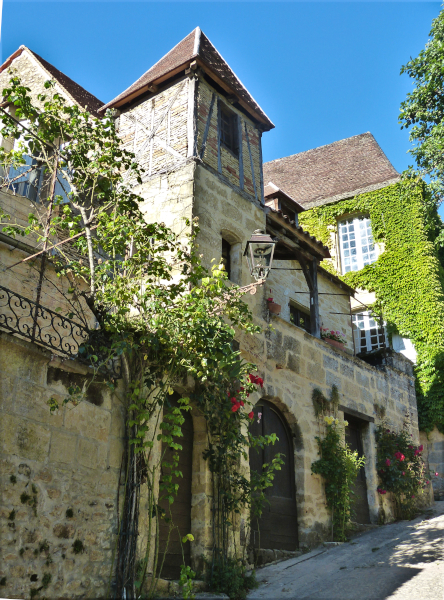
Allein schon die wunderschön gestalteten Häuser – nicht nur Ämter, sondern auch Palais reicher Bürger – sind eine Augenweide.

The entrances of official buildings and ancient individual homes of rich citizens are a sight to see!

Place de la Liberté

Manoir de Gisson

Der Marienbrunnen. Sarlat hat etliche Belagerungen überstanden, weil in der Stadt reichlich Zugang zu Frischwasserbrunnen besteht.

The fountain of Saint Mary. In former times, Sarlat was able to ride out several sieges because of its ample supply of fresh water fountains.

Dieses seltsame Gebäude aus dem 12.Jhdt. hat den makabren Namen „Totenlaterne“. Tatsächlich ist heute nicht mehr bekannt, wozu es einst diente. Nun hänge ich noch die zwei Zeichnungen aus Sarlat an, die ich bereits vor längerer Zeit gepostet hatte:

This curious building from the 12th century is called „Lantern of the dead“ – actually, today nobody knows exactly what its function once had been. Now I just add the two sketches I had made of Sarlat and already posted some time ago:

Château de Monbazillac

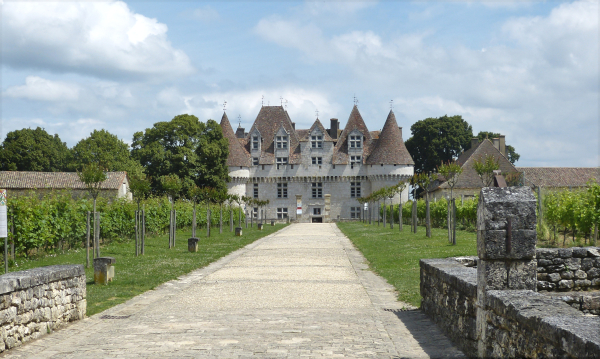
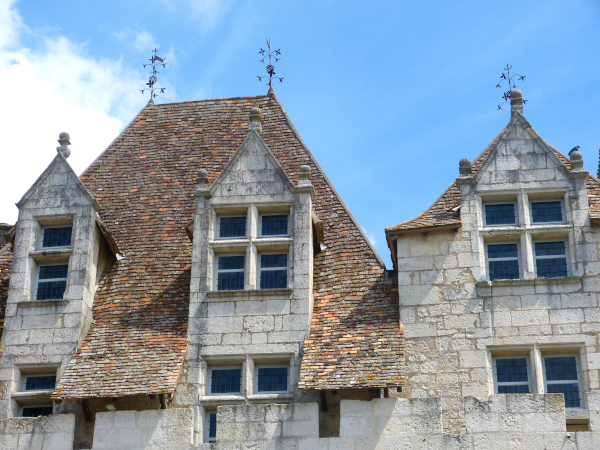
Dieses Schloss aus der 2. Hälfte des 16. Jahrhunderts ist vor allem wegen seiner weißen Dessertweine bekannt. Einiges hatte ich ja in meinem „Reisetagebuch Périgord“ schon beschrieben. Hier einfach ein paar Eindrücke von der Lage und dem Gebäude:

This castle from the second half of the 16th century is mostly known for its white dessert wines. In my posts „Travel Journal Périgord“ I had already wrote a bit about it. Now here are some impressions of the building:

Monbazillac liegt zwar nicht auf einem sehr steilen Berg, doch die Anhöhe bietet trotzdem einen guten Blick in die Landschaft.

Situated on a soft hill instead of a steep rock, Monbazillac nevertheless offers a nice view.

Wie man sieht, liegen einige Weinberge direkt vor der Tür…

The vinyards on the doorstep…

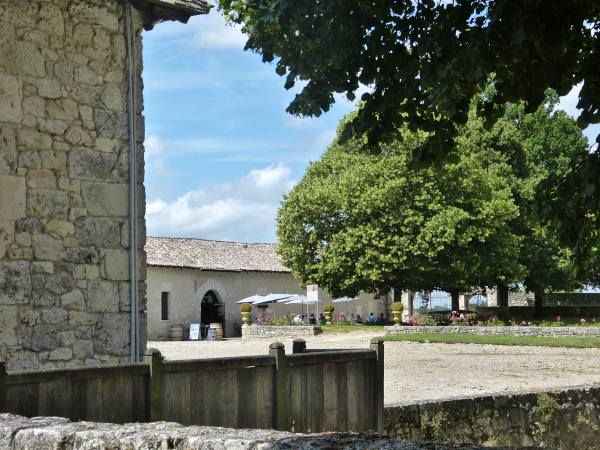
Wer mag (und nicht ans Steuer muss, wie ich), darf im Schlosshof eine Weinprobe machen.

If you like (and aren’t driving, as I was), you can taste the wines in the coutyard.

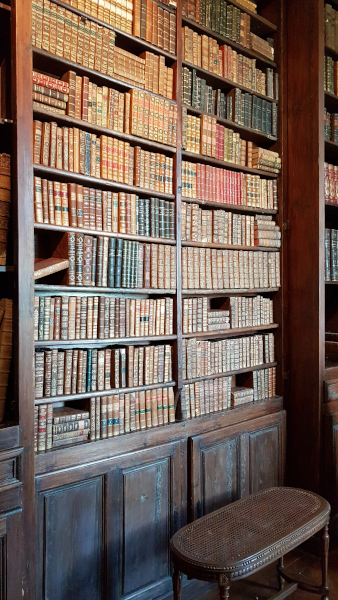
Die Innenräume sind nur spärlich möbliert – hier gibt es besonders viele alte Schränke, eine Bibliothek, eine Ahnentafel an der Wand und im Keller eine Ausstellung über die Geschichte des Weinbaus.

Inside, the rooms show little furniture except for many ancient wardrobes and cabinets; there’s a library, a family tree on the wall, and an exhibition about viniculture in the cellar.