
Fotos von drei ganz verschiedenen Landschaften waren Inspiration für diese Acrylbilder.
Photos of three very different landscapes have served as reference for these acrylics.


Fotos von drei ganz verschiedenen Landschaften waren Inspiration für diese Acrylbilder.
Photos of three very different landscapes have served as reference for these acrylics.

Acryl auf Leinwand/acrylics on canvas, 40x30cm
Vor einigen Jahren hatte ich im Dezember eine Woche auf Sardinien verbracht. Ein Tagesausflug ging damals auf die Halbinsel Sinis, zu den Überresten einer römischen Siedlung. Tatsächlich ist die Geschichte des Ortes noch älter; hier siedelten Menschen schon in der Bronzezeit, später unterhielten Phönizier hier einen Handelsstützpunkt, schließlich kamen die Römer. Zwar existieren nur noch Ruinen (die Steine der Stätte dienten u.a. zum Bau der nahen Provinzhauptstadt Oristano), doch wird der Ort weiterhin archäologisch erforscht. Wer Interesse hat, kann sich im Netz weitere Infos holen – oder selbst dorthin reisen! Allerdings muss man im Sommer natürlich damit rechnen, dass wesentlich mehr Besucher dort sind – ich war damals allein auf weiter Flur und konnte es total genießen, besonders die winterliche Lichtstimmung. Wichtig: die ganze Halbinsel im Golf von Oristano ist Naturschutzgebiet und das Baden trotz hübscher Strände daher verboten.
Some years ago I had visited Sardinia in December, spending a day on the peninsula of Sinis, in the Gulf of Oristano on the westcoast. This area is a nature reserve ( no swimming, bathing or grill parties allowed) and also features the ruins of the ancient Roman city of Tharros. Most of the ancient stone blocks have later been used to build Oristano, but amidst the remaining rubble you can still distinguish an Amphitheater, thermal baths etc. Archäological investigations are ongoing. Actually, the site is much older: people have settled here since the Bronze Age, later the Phoenicians maintained a trading base before the Romans built a city. If you’d like to know more, there’s a lot on the net or you just visit the place yourself! Just be warned: in summer there’s a lot of visitors around, whereas I had the place completely to myself for hours! Thus, I could not only explore but also enjoy the moody winter light without haste.
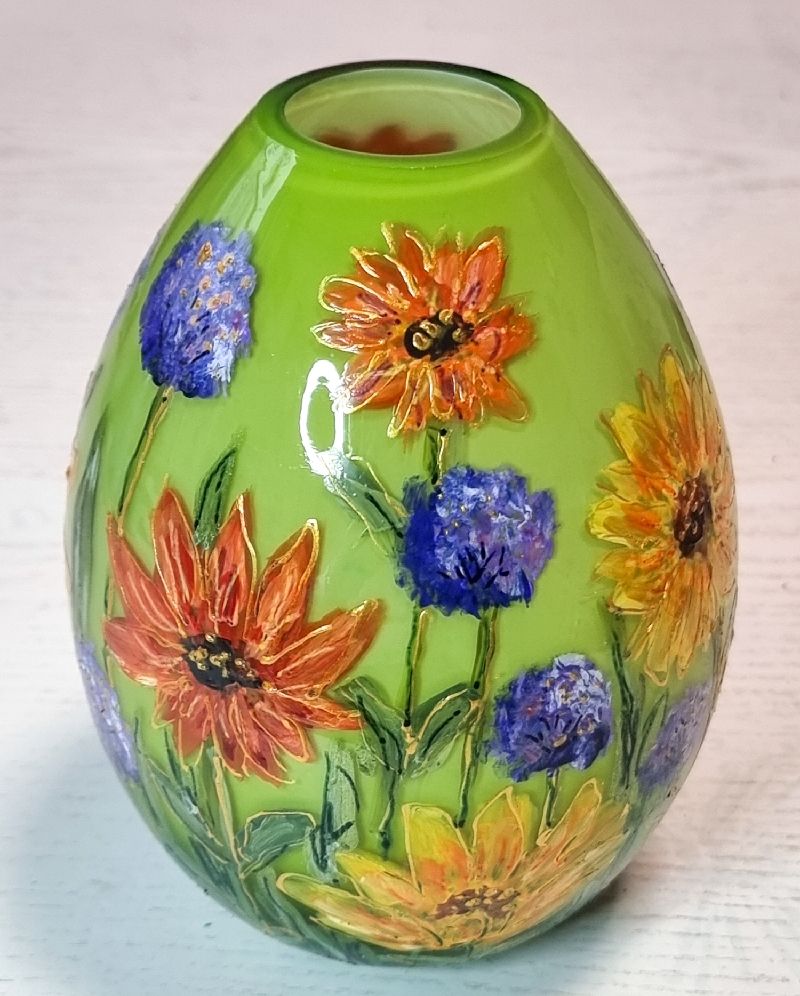
Die kleine Glasvase oben war bereits grün, daher habe ich nur die Blüten mit Glasfarbe aufgemalt und alles im Ofen fixiert. Schade, dass ich sie erst jetzt im Sozialkaufhaus entdeckt habe, denn von der Form her wäre sie ein schönes Ostergeschenk gewesen😉
The small glass vase already showed this light green colour, so I just painted the flowers with glass paint, fixating it by baking it in the oven. Alas, I just discovered this one two days ago in the thrift store/charity shop: going by its shape, it would have been a nice gift for Easter😉
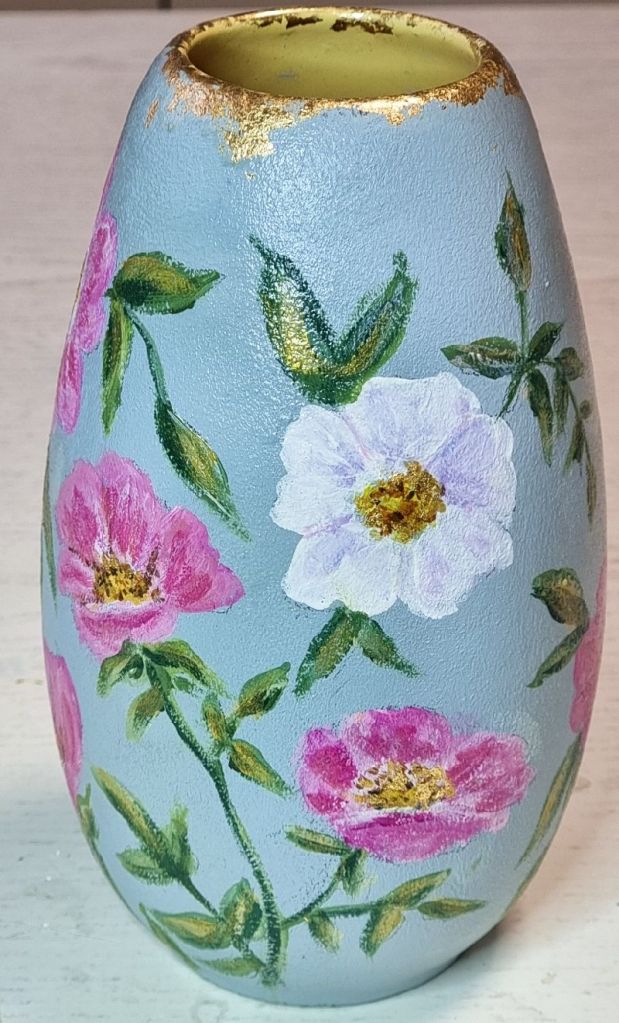
Keramikvase mit Heckenrosen: klassische Acrylfarben auf Kreidefarbe (eignet sich super als Grundierung), mit Lackversiegelung. Dieselbe Technik habe ich bei der kleinen Vase unten verwendet. Achja, und jetzt bekomme ich den Hintergrund viel gleichmäßiger hin: indem ich ihn mit einer kleinen Schaumstoffrolle (oben)auftrage, nicht mit Pinsel (unten).
Ceramic vase with dog roses: acrylics on chalk paint (which is great as base/background layer), with varnish. I’ve used the same technique for the small one below. By the way: applying the background using a sponge roll (above) instead of a brush (below), it gets a lot more even and smooth …
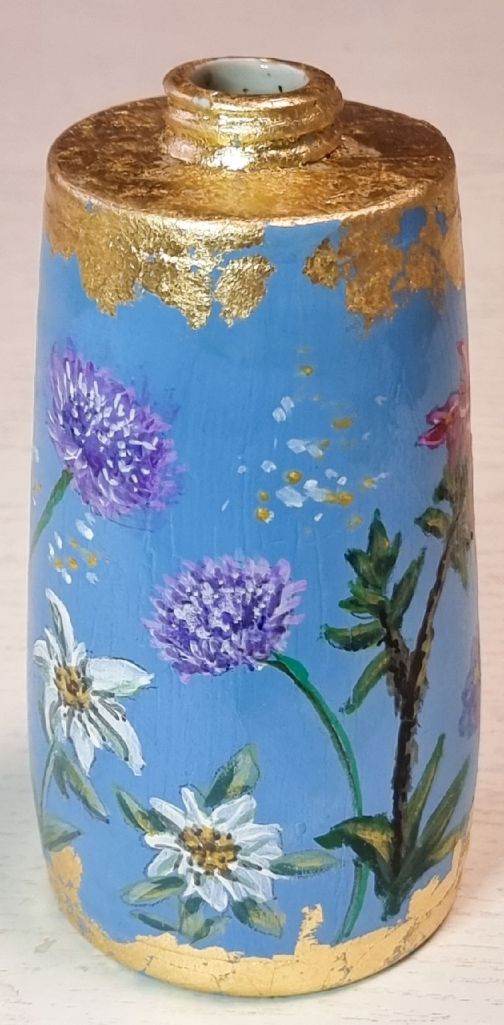
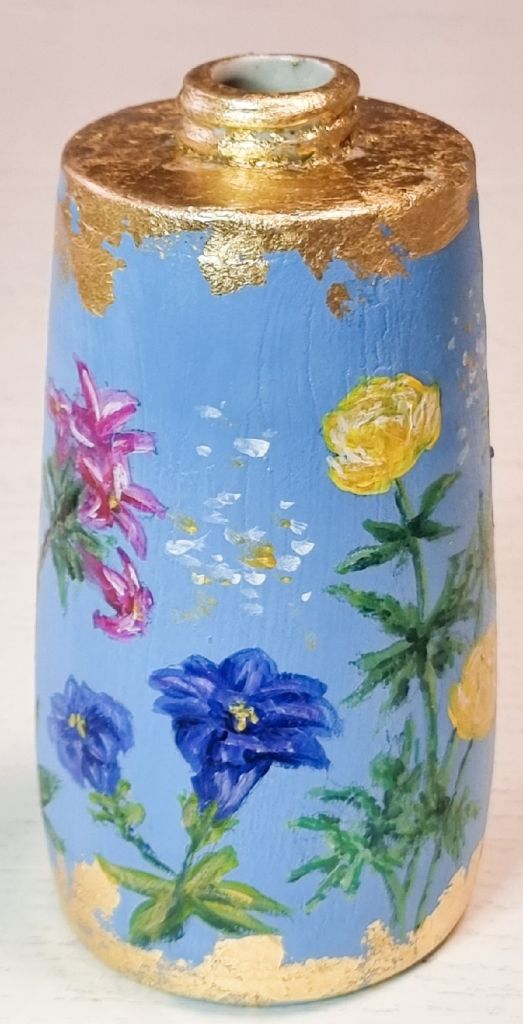
Hier habe ich Alpenblumen aufgemalt.
Here I’ve chosen alpine flowers as a theme.
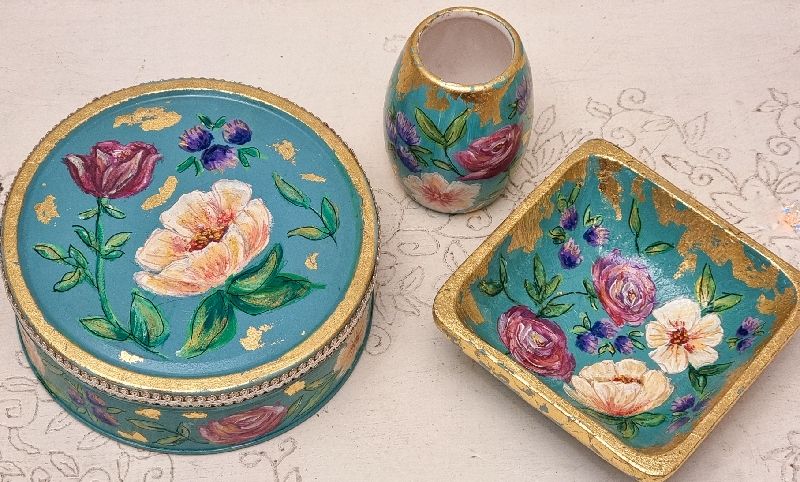
Das Muster kommt Euch bekannt vor? Klar, denn die kleine Vase vom Bild oben hatte ich schon gepostet. Nun wurde ein ganzes Ensemble daraus – Holzschälchen und edle Blechdose – , also insgesamt 3 verschiedene Materialien, im selben Design. Acrylfarben machen es möglich! Das Set bekommt eine liebe Freundin zum Geburtstag.
Above: you know this design? Yes, I had already postet the small vase. By now, it has got company: a tin can and a wooden bowl. 3 different materials, handpainted in the same design, thanks to the versatile acrylics! This set will be a birthday gift for a dear friend.

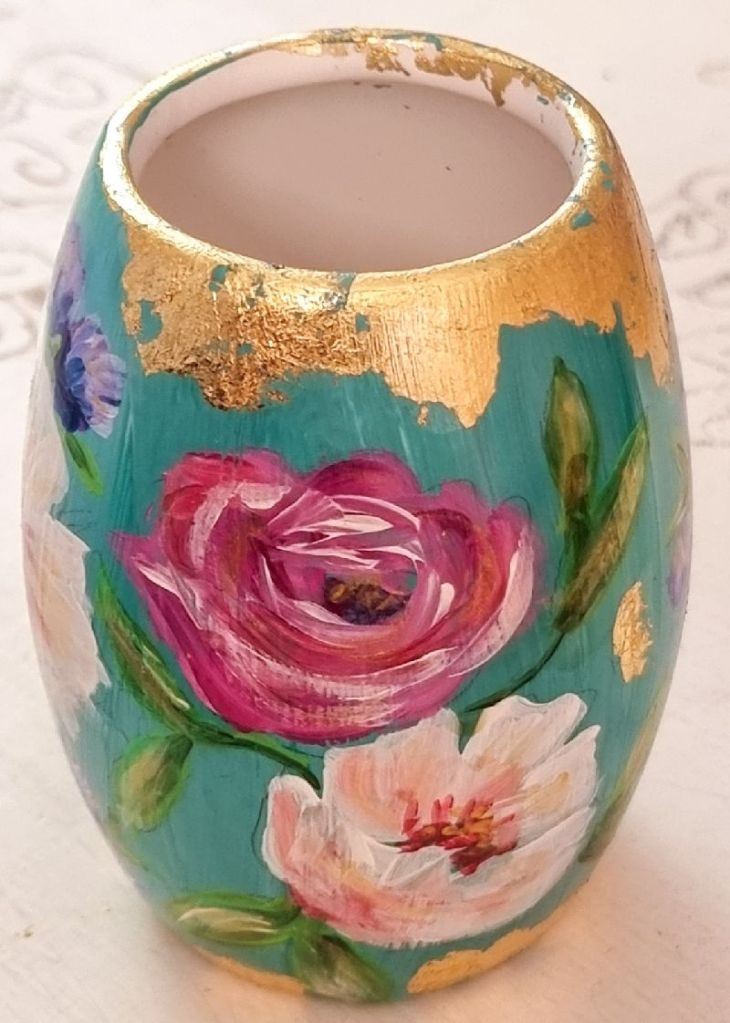
Diesmal habe ich gebrauchte Keramikvasen bemalt und festgestellt, dass das leichter ist, als bei den Glasvasen, weil die Farbe nicht so rutscht. Diese kleine, in frischem Türkis, war komplett glatt weiß gewesen.
This time I’ve chosen thrifted ceramic vases instead of glass – and as it turned out, this was a bit easier because they took the paint better. This one is quite small, but lovely with its fresh turquoise colour.
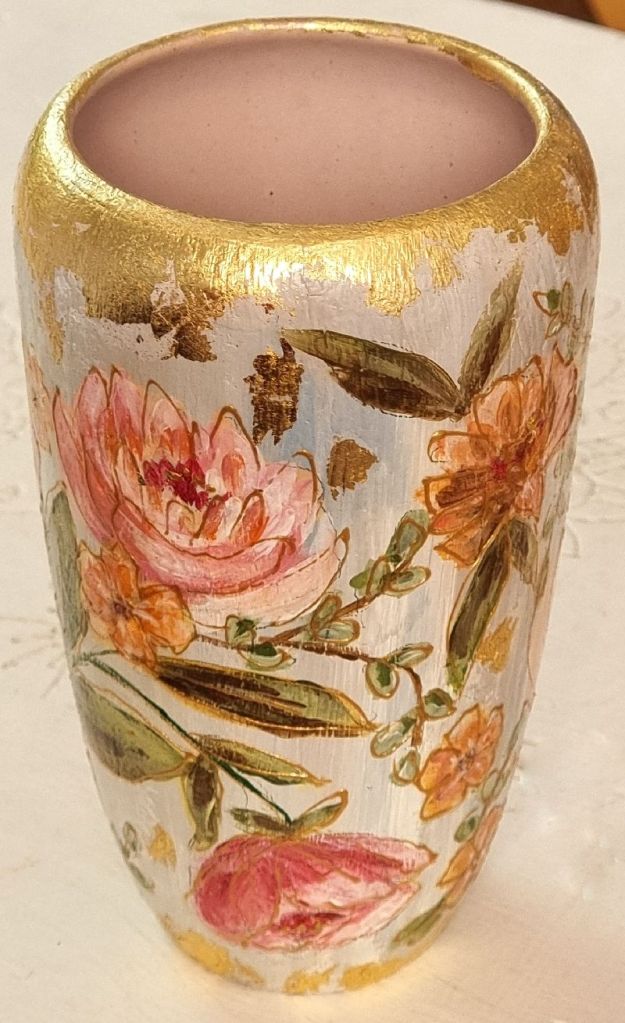
Die nächste hat ein ganz anderes, eher klassisch-elegantes Farbschema. Sie hatte ursprünglich eine rustikal-raue, senffarbene Oberfläche und kommt nun wesentlich edler daher.
The next one shows a very different colour scheme, more classic elegance. It had been quite ugly with a rough, mustard-coloured finish, but I liked the shape. Now it has been transformed into a more classy piece.

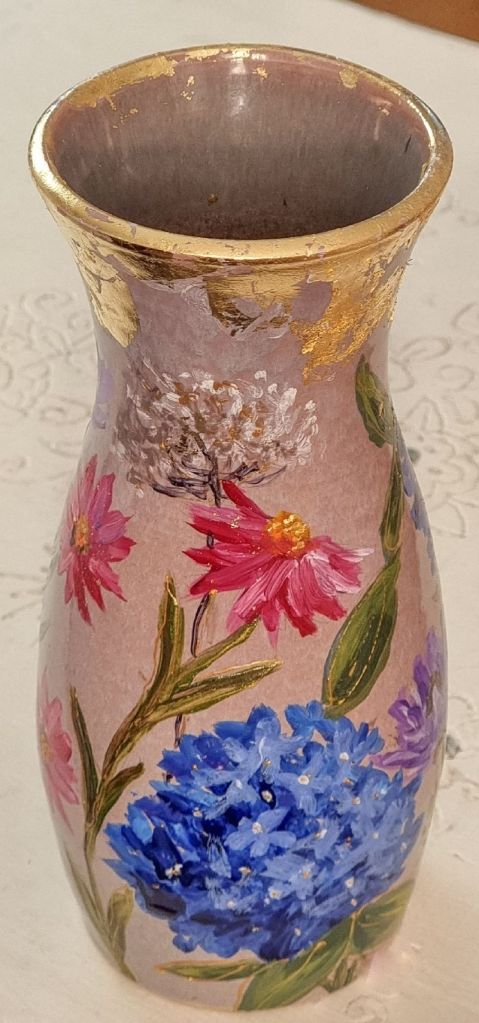
Die letzte habe ich etwas anders behandelt: da sie bereits eine blass-rosa Glasur hatte, habe ich sie nicht grundiert und auch andere Farben verwendet, nämlich spezielle Porzellanfarben. Diese müssen nur im Ofen gehärtet werden und sind dann fest und glänzend. Die anderen Vasen hatte ich mit normaler Acrylfarbe bemalt und dann überlackiert.
The last one has been treated a bit differently: since I liked the colour of the glazing, I didn’t paint a base layer. Instead, I’ve used special ceramic paints for the flowers. They just have to be fixated in the oven to achieve a glossy, permanent finish. The other vases have been painted with normal acrylics with two layers of lacquer/varnish on top.

Warum der Unterschied? Weil es mit den Porzellanfarben sehr schwierig ist, eine gleichmäßige, großflächige Basisschicht aufzutragen.
So why the difference? Well, with the special paints for ceramics it’s not easy to achieve an even base layer.
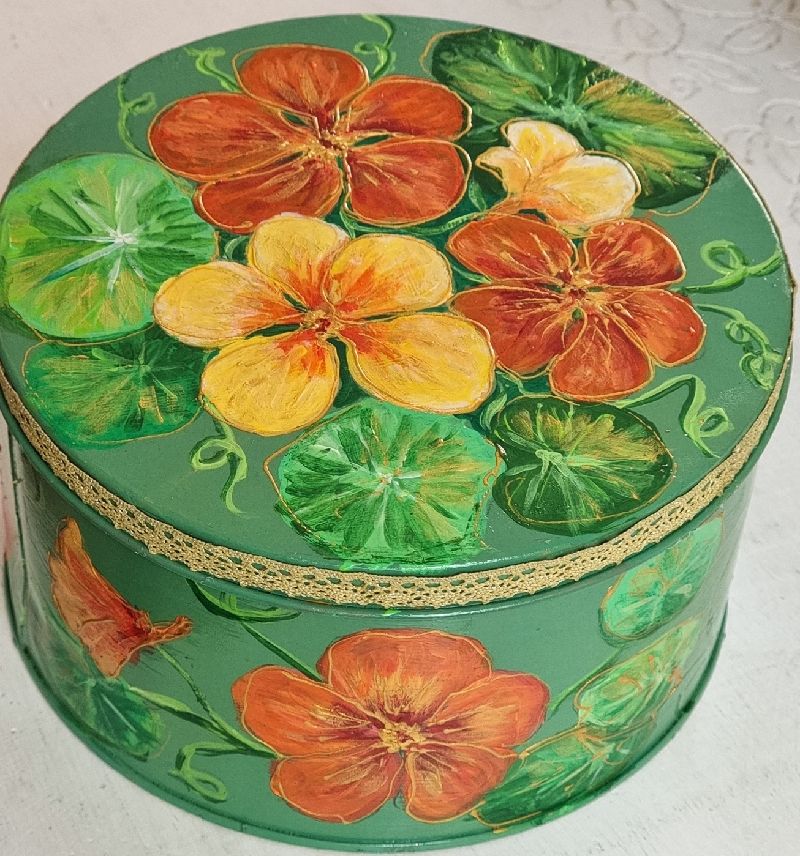
Und das ist die erste Blechdose, die ich bemalt habe! Meine Erfahrung dabei: am besten eine Dose nehmen, die am oberen Rand des Unterteils (0,8cm) unbedruckt ist und dann diesen Rand auch beim Bemalen auslassen. Dann lässt sich der Deckel auch weiterhin gut öffnen und schließen.
Now this is the first tin can I’ve painted. What I’ve learned from it: always choose a can with no print on the upper edge of the lower part, and leave this edge (0,8cm) unpainted. This way the lid will open and close without fuss.
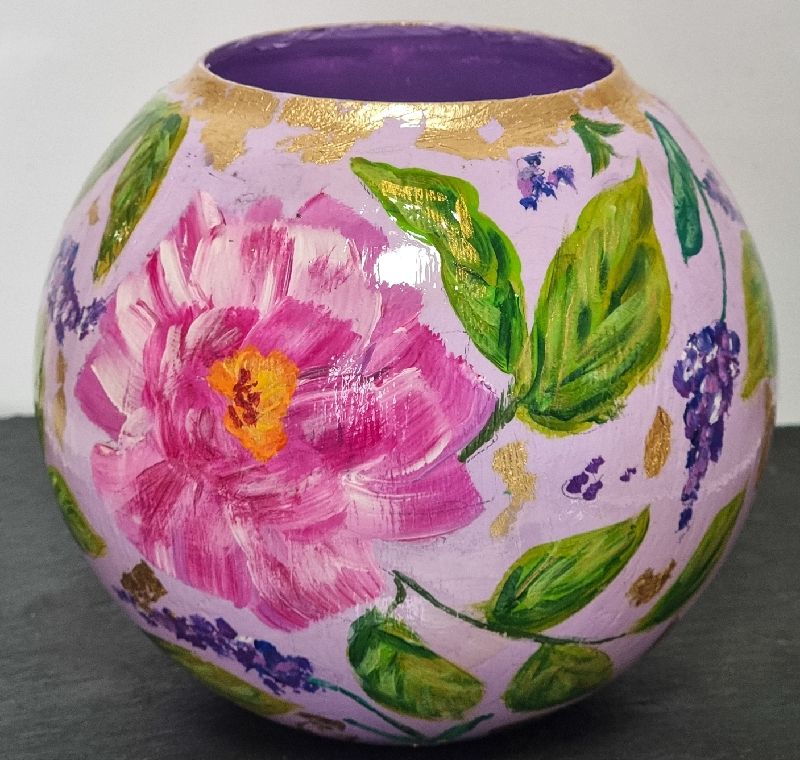
Wie angekündigt, habe ich noch weitere, etwas größere Vasen bemalt. Beide Basisvasen habe ich aus dem Sozialkaufhaus. Somit ist dies auch ein tolles Upcycling für alte Vasen, Blumentöpfe und viele andere Gegenstände – werde es demnächst mit Blechdosen versuchen.
As intended, I have painted two more vases which are a bit larger than the first one shown in the post before last. Both „base“-vases have been purchased in the thrift store/charity shop. So this is a nice way to upcycle vases and flower pots – as well as many other items (will try with tin cans soon).


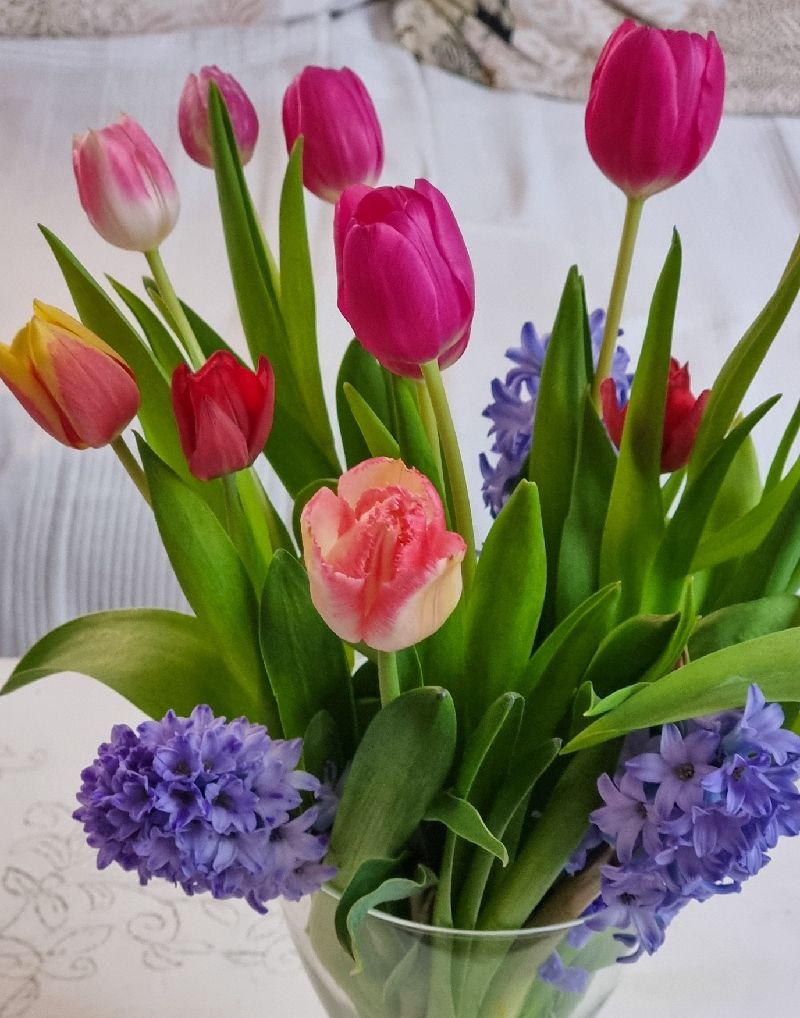
Nachdem ich im Netz bemalte Glasvasen einer brasilianischen Künstlerin gesehen hatte, spielte ich schon länger mit dem Gedanken, das auch zu versuchen. Nun hat mich ein bunter Blumenstrauß aus Tulpen und Hyazinthen inspiriert, eine ca. 15cm hohe Vase zu bemalen. Zunächst nur eine kleine, die ich schon besaß, zum Ausprobieren.
After admiring some painted glass vases by a Brazilian artist on the net, I had considered for some time to try this myself. Now, a colourful bunch of tulips and hyazinths have inspired me for this vase (approx. height: 15cm). I’ve chosen a small one I already owned for this first try.
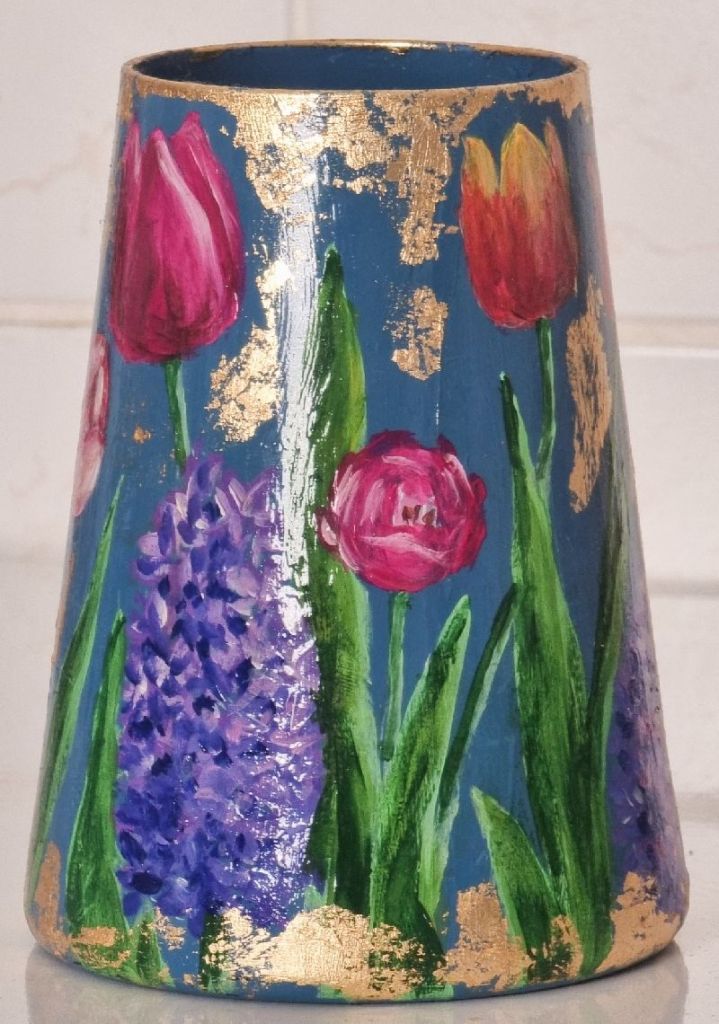
Die Blattmetall-Auflage und der Hochglanzlack sorgen für den besonderen Touch. Insgesamt wirkt sie sehr schön und edel, aber was ich noch herauskriegen muss, ist, wie ich den Hintergrund gleichmäßig glatt auftragen kann… Auf alle Fälle werde ich mich das nächste Mal an eine größere wagen.
The metal foil and the high gloss varnish add a classy touch. All in all, it’s turned out beautifully, but I still have to figure out how to apply the background layer smoothly…. Anyway, next time I’ll try a larger one.

Diesmal habe ich einen grafisch bedruckten Hintergrund für den Magnolienzweig gestaltet. Ich mag den Kontrast zwischen abstrakt und naturgetreu.
The printed abstact background makes for a nice contrast to the magnolias painted from nature.

Neulich habe ich diese Lilien geschenkt bekommen – sie standen gleich Modell für dieses Bild. Nun kann man sie bewundern, ohne den etwas zu starken Duft, den sie verströmen…
Some days ago I got these lilies – a perfect model for an acrylic painting. Now you can admire them without having to cope with their quite strong (almost nauseating) perfume…
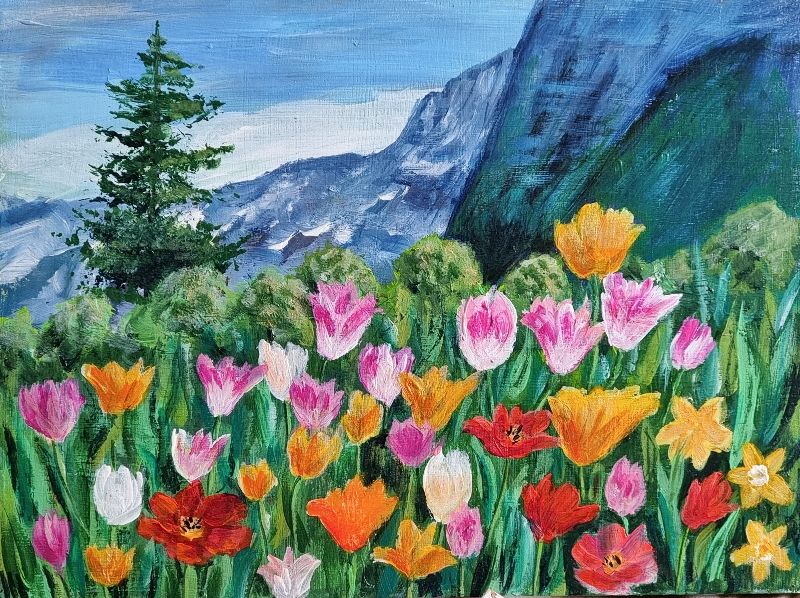
Nach einem Foto, das ich mal im Frühling in Engelberg gemacht hatte, entstand dieses Bild. Tulpen mal nicht auf weitem Feld, sondern ungewohnt mit den Bergen im Hintergrund.
For this painting I used a reference photo from a trip to Engelberg some years ago. It’s a bit unusual with the alpine landscape instead of the usual flat tulip fields in the Netherlands..
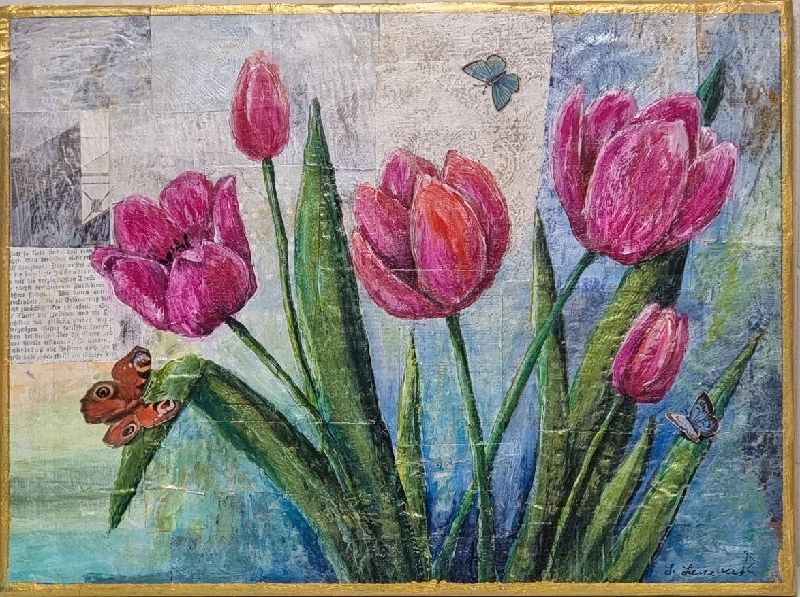
Nochmal Tulpen, diesmal auf einem Collage-Hintergrund. Die Schmetterlinge sind aus einem alten Biologiebuch ausgeschnitten und aufgeklebt.
Tulips again, on a collage background and with butterflies that have been cut from a vintage book.
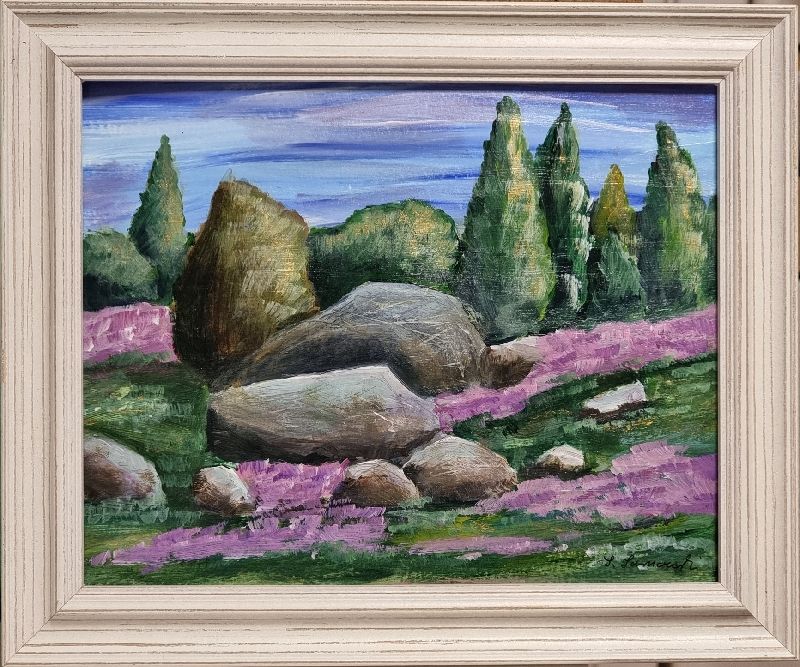
Bei diesem Heidebild habe ich einen etwas anderen Stil ausprobiert, der sich mehr an Formen orientiert als an Einzelheiten. Es hat bereits ein neues Zuhause gefunden: meine Nichte hat es sich ausgesucht.
For this picture of the Luneburg Heath I’ve tried a different style, with more focus on shapes than on details. It has already found a new home with my niece.
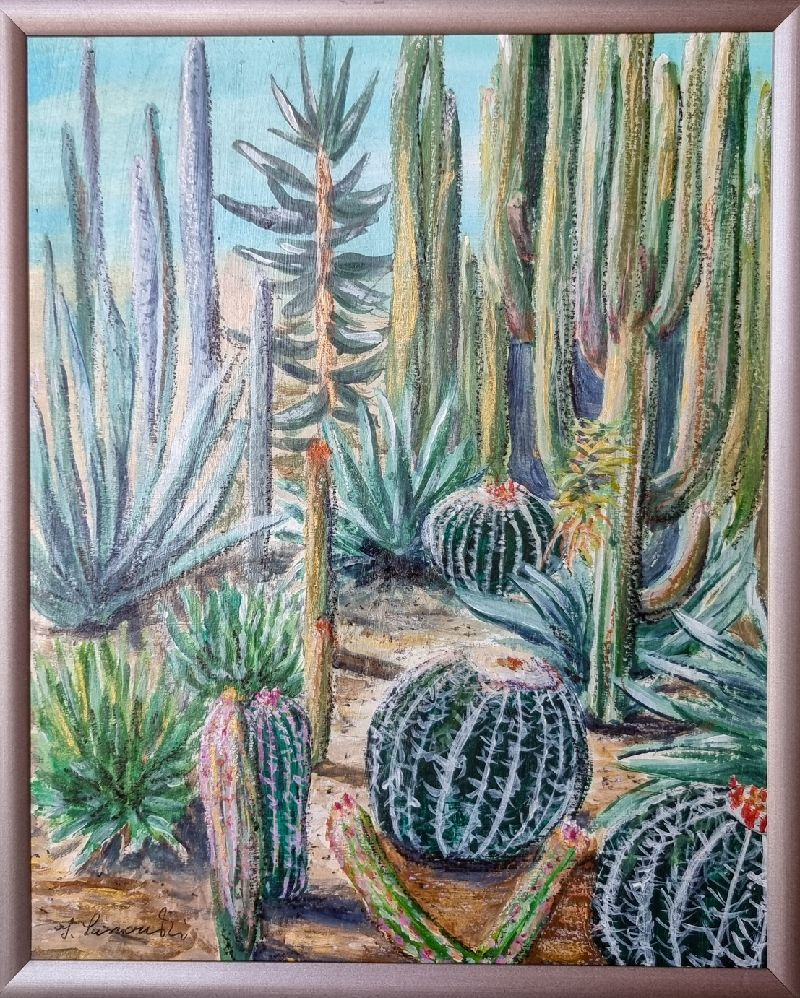
Das Kakteenhaus im Botanischen Garten ist super, wenn man mit Grüntönen spielen will.
The cacti greenhouse in the botanic garden offers a great opportunity to play with different tones of green.
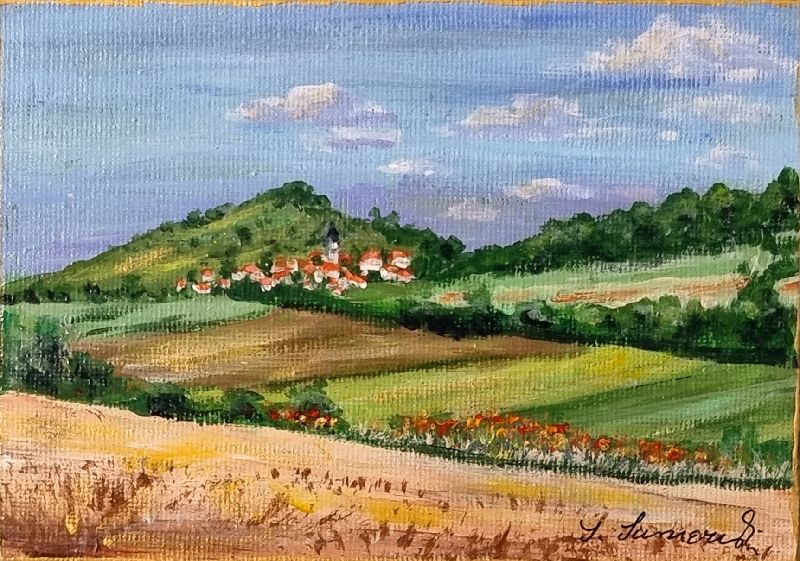
Diese Acrylpostkarte zeigt eine Landschaft am Nördlinger Ries, nicht allzu weit von hier.
This acrylic postcard shows a typical landscape near the Nördlinger Ries, not too far from here.
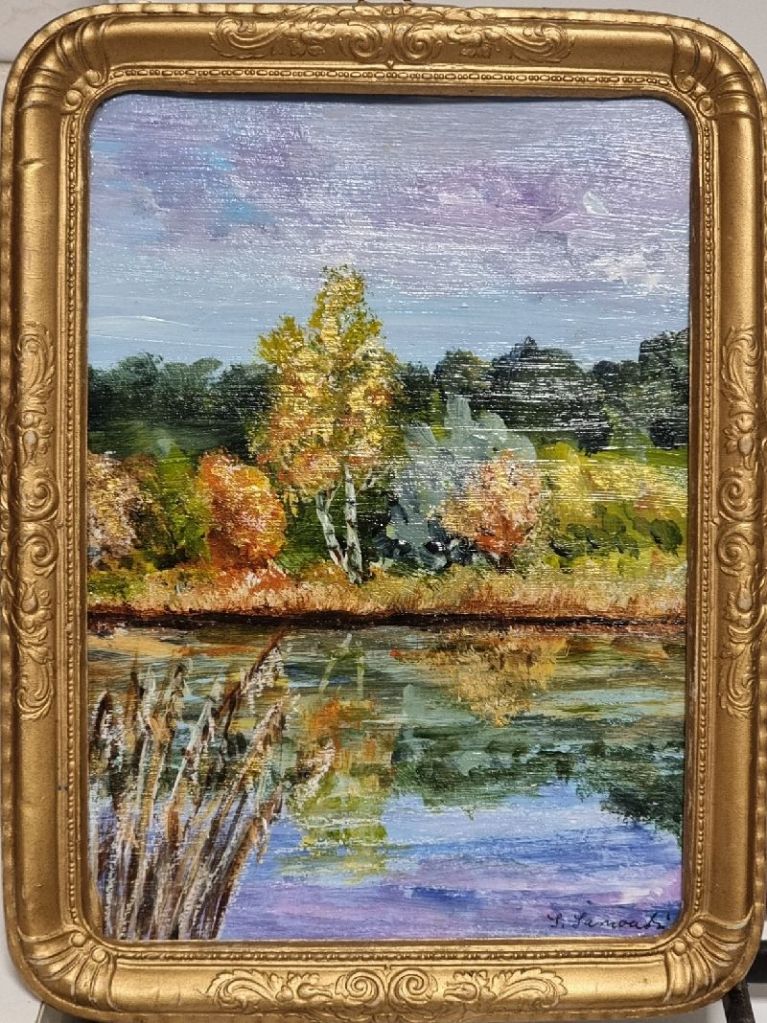
„Herbst am Brombachsee“ – ein kleines Acrylbild. Der Rahmen ist ein Flohmarktfund.
„Autumn at Lake Brombach“ – a small acrylic. The frame is a flea market find.
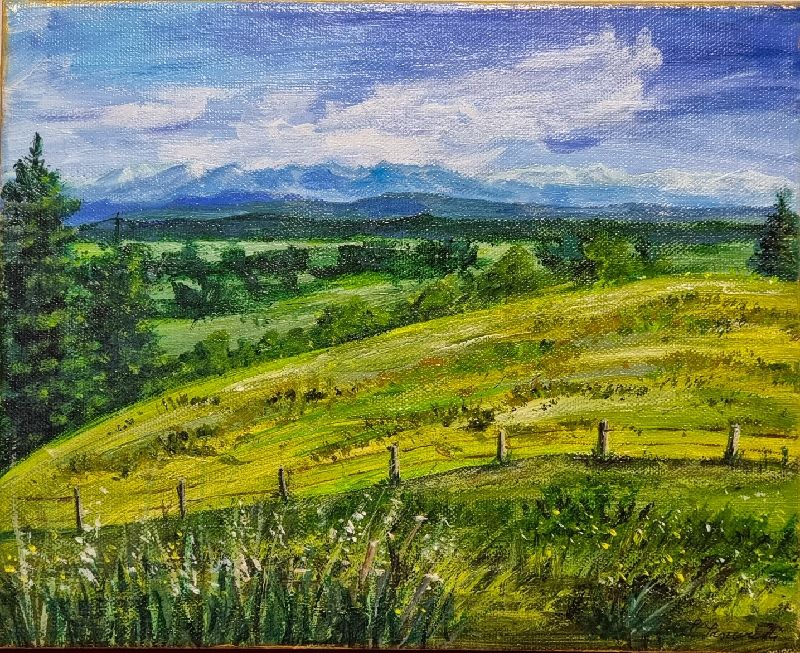
Eine kleine Leinwand: Landschaft im Allgäu. So gern ich mit Feder und Aquarellfarbe arbeite, Acryl macht auch sehr viel Spaß!
A small canvas: landscape in the Allgäu region. As much as I love working with pen, ink and watercolours, I have to admit that acrylics are a lot of fun, too!

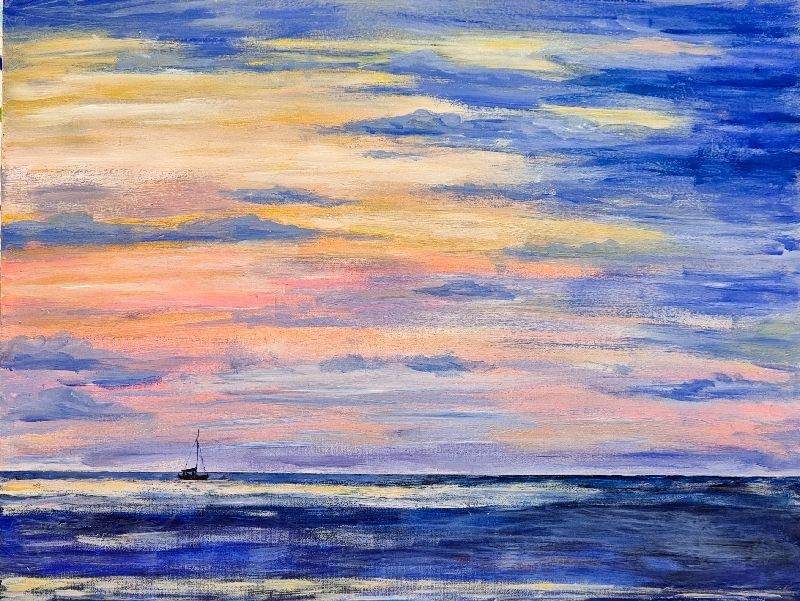
Bilder von Strand und Meer sind immer reizvoll zum Malen. Fünf meiner Fotos aus verschiedenen Urlaubsreisen habe ich nun in Acryl (30×40cm) umgesetzt.
Seaside pictures are always fun to paint. So I’ve done five acrylics (30x40cm) from photos of different travels.



 creatologyblog